According to the Universal Declaration of Human Rights, Article 26:
- (1) Everyone has the right to education. Education shall be free, at least in the elementary and fundamental stages. Elementary education shall be compulsory. Technical and professional education shall be made generally available and higher education shall be equally accessible to all on the basis of merit.
- (2) Education shall be directed to the full development of the human personality and to the strengthening of respect for human rights and fundamental freedoms. It shall promote understanding, tolerance and friendship among all nations, racial or religious groups, and shall further the activities of the United Nations for the maintenance of peace.
- (3) Parents have a prior right to choose the kind of education that shall be given to their children.
Education is considered a basic human right and a key stepping stone to major sustainable development, however 31 million girls mostly from developing countries are still not attending primary education
Out of 774 million illiterate people over the age of 15, two thirds are women. Even though it is proven that educating women causes them to directly contribute to the growth of national income though the labour force, in certain countries in the Middle East and North Africa suitable training is not acessable for many. Although many girls in developing countries are enrolled in primary education secondary education is quite limited. Alone a basic education is not enough to prepare them for modern job markets.
Education is also the highest determining factor that contributes to women’s age at marriage and when they have their firstborn. It is proven to lower child mortality rates massively.
Child Mortality Rate in Egypt, by Mother’s Level of Education
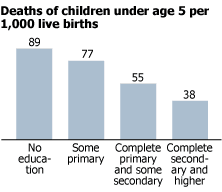
Source: ORC Macro, Egypt DHS, 2000.
What role could the EU or european citizens possibly take to encourage this essential right in developing countries?
Governments of developing countries or countries with low education standards could be encouraged to make the Millennium Development goals part of their national development plans, these include achieving universal primary education and promoting gender equality. If these goals were achieved there would be a tremendous boost in the available workforce of the countries, women managing their households would have knowledge of their own income and expenditure and the literacy rates of the next generation would rise dramatically. A small chance at education could see the complete development of a country and enable it to manage its own resources with the strong support of newly empowered citizens.

Róise McGagh (IE)
Sources:
 CONNAUGHT ULSTER 2015